
How we raise your puppy
Talk to any two dog breeders and you will find there is quite a broad definition to "successfully raising and training" puppies. At Mills River Doodles, we acknowledge that the way we do things may be quite different or very much the same as other breeders. Not everyone is going to agree with every decision on timing and techniques that we use. Our methods often change as we learn more. Experience is a great teacher and even one rouge puppy can change up your view.
We want to be upfront with our families on what we do and why! Continued Education is paramount in what we are striving to do. That education is for us, our dogs, the puppies and the puppy families.

We are very "hands on" with our litters. From their first breath we are very involved with the pups. We assist our females in the birthing process. We joke that we are their "doula's". With our main breed, Aussiedoodles, the Mama's often want their "person" very close. Like in the whelping box, cuddled up with a blanket and pillow. Comfort for the Mama dog, and a back ache for us humans. We joked that our retired Mama Mazyn needed her human "Dad" nearby. She (multiple times) would hold off on progress of a pup until he was in the room. Mama Roxy expects our assistance so much that for the last few pups she just nurses the others, while the human cleans the pup and brings it up to her to make sure it is satisfactory.

This technique has worked well for us. It was the method we witnessed with our mentor when we were observing before our very first litter. Our Mama dogs are with us for at least a week before their due date (if they are in a guardian home). Pups arrive in our home. We try to make the area comfortable and quiet for the Mama. A large roll of linoleum provides a waterproof base, covered by a washable whelping pad and whelping box. While in early labor there are usually plenty of pillows, blankets and often a make-shift "tent" covering the box. Individual females have different preferences and we try our best to help them feel safe in their very own area.
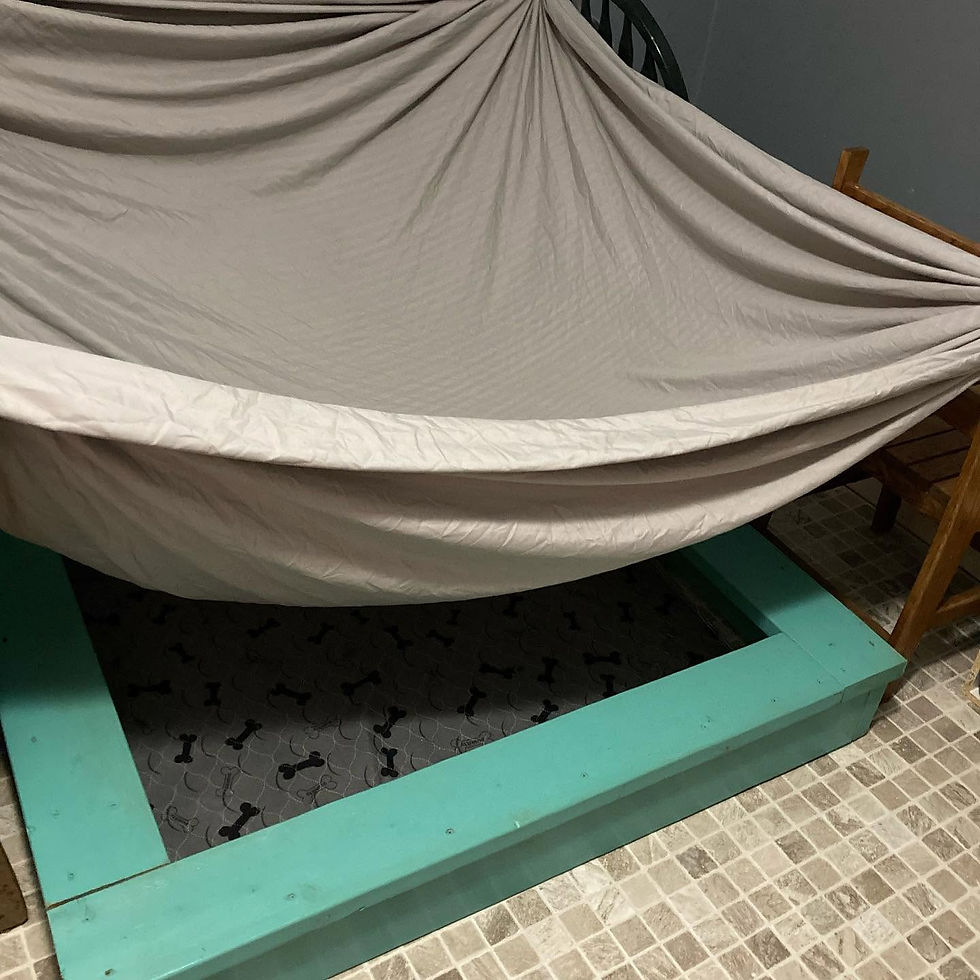
A very handy trait that is programmed into the female dog is that their temperature will often drop before the start of labor, or "whelp". Average temperature for a dog is 99.5-102.5 F. Around day 57 we may start checking the temperature of the mama dog and when we see it dip into the 97-98.6 range we know that active labor typically starts in 12-24 hours. Once that happens we do not leave the house. We make sure her room is set up and that all of the equipment we may need is at hand.
Early Labor is very much like most humans would expect. We let the female do whatever she is comfortable with. She is free to roam the house if she wishes, but often, she wants to cuddle in her whelping tent. My daughters are very important during this time, as we take turns with Mama in her room. As previously mentioned most of our Mama's want us very close by.
Puppy Time!!!
When the first puppy arrives there are usually two of us in the room with Mama Dog. One records the time, position, sex and coloring of the pup and the other is to assist mom. Typically for us, pups are born anywhere from 20-120 minutes apart. Longer than 2 hours we start to consider contacting the vet. Thankfully Aussies and Poodles are strong Mama's. To date we have only had one female deliver at the vet. Mama Phoebe delivered all eleven pups by herself, she just needed some vet support for low blood sugar to keep her energy up! (That was her third and last litter)

After the last pup arrives we stay with the Mama for at least 2-3 hours. It can be common that a female takes a "whelping pause" and another puppy may surprise you with an arrival. We increase the females food intake and provide plenty of treats and meal toppers for the next several weeks as she cares for the litter.

From Day 3-16 Early Neurological Stimulation

This is part of the Puppy Culture program!! It involves putting the puppies in different positions, tickling their toes and placing them on a temperature change (cold washcloth) for just a few seconds. It introduces slight stresses to their system and their bodies learn to cope.
A good article to review for references to studies and a balanced view on it: https://www.extension.purdue.edu/extmedia/VA/VA-24-W.pdf
We often do this as a family. Our older children help me in the "Puppy Culture" portion of the day. Many hands cuddling and turning puppies makes for great family time and short end to the work.
Short Video Link in Facebook showing how we do the ENS! https://www.facebook.com/reel/660354113628103

During this time the puppies are still in their whelping box (a specially built box we make with sides to reduce risk of Mama rolling on little ones). There is an absorbent whelping pad that we are able to change out and wash to keep everything clean and tidy.
2-4 Week Old Puppies
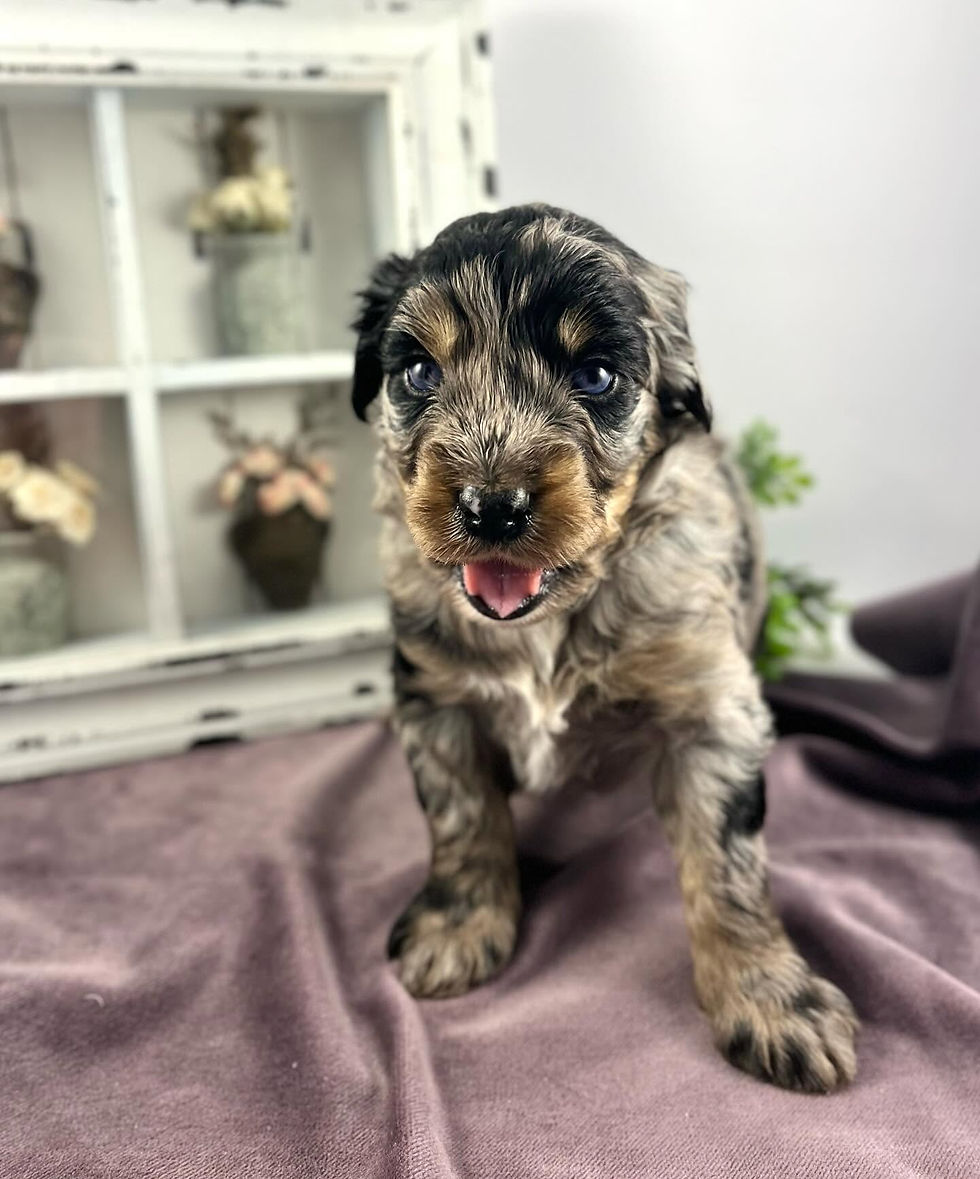
This is an adorable stage. Much like toddlers, the puppies are learning to walk, play, bark and growl! By this point we have expanded the whelping area to a "puppy play pen".

We use adjustable fencing, a potty area of pads (by 4 weeks they have upgraded to pine shaving "litter") and a nesting area with a comfortable bed. We are introducing new sounds, classical music and new experiences for the pups.
Their first deworming starts around 2 weeks and continues every 7-10 days until they go home. We currently use Pyrantel, Fenbendazole, and Toltrazuril. Almost all puppies are born with parasites. (They flare up in the female during pregnancy). They can also reappear during times of stress, especially in puppies, before their immune system is strong and mature. We can never guarantee that a puppy will not test positive at their subsequent vet appointments when they get home, but we try our best to keep them as healthy as possible and keep the load low.

We do nail trims, handle the puppies to get them used to being touched and the puppies are exposed to new sounds, textures, and experiences. The blow dryer, vacuum and even YouTube videos of thunderstorms and door bells provide great opportunities of exposure to the young dogs. It does not guarantee that the dog will never have an issue in the future with those things but positive early exposure has been proven to help with the confidence of a dog even into adulthood.
At 3-4 weeks it is also time to start puppy food! We like to wean our puppies slowly. This allows their system to get used to new foods and also gives the chance for Mama dog's milk supply to decrease gradually. We start with canned food mixed with goat's milk (either powdered or fresh from a local farm or specialty pet store). We work up from once a day to three times a day.
Canned food we have used
(we are Amazon affiliates and as such, may earn from links below)
Royal Canin https://amzn.to/4dktgMh
Merrick Puppy Chicken: https://amzn.to/4rj1k2i
Beef: https://amzn.to/3GYJmis
5-6 Week Old Puppies
By now they are going outside daily, practicing with early crate training, gaining confidence and becoming a lot of work! We clean their area daily, with a mop and deep clean usually happening every 2-3 days. Depending on the size and activity level of the litter, some have moved out to the "Puppy house" on our property that has a larger kennel area to keep them from climbing the puppy play pen fences and getting themselves in danger. We bring the pups back into our house often for training and working individually on Puppy Culture activities.


Aussiedoodles have more energy than most pups! For many breeds a 5-10 minute outside playtime at 5 weeks and they are ready for naps. Aussiedoodles last longer, and take a good 20-30 minutes or more to show any signs of slowdown. We play outside with elevated dog beds, tunnels, balls and toys until we see they are ready for a nap. We then head back in for a short crate session (age we start this depends on maturity of the litter). In the crates they get a piece of chicken jerky or canned food to create a positive association.
Our Australian Mountain Doodles puppies that have more Bernese Mountain Dog in them are for sure more lazy. Still active doodle dogs, but we have noticed they wear down quicker as pups.

We never guarantee a puppy will leave our household crate trained or housetrained. This can take some puppies up to 6-7 months to figure it out. Very much like human children, some puppies learn very quickly and others may struggle for a while. We are here to support our puppy families in helping them teach their pups even once they are home, while still maintaining proper expectations. These little ones have just entered the world! The pine shavings in litter trays we use in their puppy house gives to pups a great start at housetraining. Here is another good article our trainer sent to us. It has great advice and

By this age we are also working on some early training and learning a few manners. These do take continued work at home. Some pups learn faster. The more stubborn ones can sometimes be the most intellegent. We specifically concentrate on helping the pup understand the "clicker" or "marking a word" , and "manding".
Clicker training is very simple. The first step involves making the clicking noise with a dog training clicker, followed quickly by offering the puppy a treat, Sometimes this does involve literally putting the treat in the young pups mouth. They are easily distracted at this age. We repeat this activity for two or three sessions, usually only offering about 10 clicks/treats at a time, before moving on to the next pup. We do training sessions in a "boring" spot of our home, away from other animals and distractions. Our bathrooms are usually an ideal location.
Clicker training helps "mark" a desired behaviour when you are unable to get a treat to the dog. It is obvious very quickly that when the pup hears the click they automatically expect a treat. This helps during your early training at home, as it has been proven when the dog hears the sound it associates with food they actually start salivating! Dogs live in a reward based world. Early clicker training or "marking" a word like "Good Boy" (same process) gives your pup a great head start at communication between the canine and human world.
Check out this YouTube Video on the process......https://www.youtube.com/watch?v=2HuQp6on_ys&t=13s
Manding is early training that tries to reset a puppy's natural tendency to jump up to the more desired response of sitting and/or looking at a human for attention. Watch any litter of puppies with their mother and it is obvious they are programmed to jump up to get the attention of their adult canine "pack" members. This is obviously not appropriate in the human world, especially as they grow into adult dogs. We introduce the idea of manding to the pups, which is something we learnt from the Puppy Culture program. It needs to be continued after leaving our home, but many pups catch on very quickly.
It involves, at first, allowing the pup to jump up on us while we are usually down on our bended knees. We hold the treat and the clicker up until they jump down. The moment all four feet hit the floor we press the clicker and offer a treat. We will do the process about 10 times and then give the puppy a break. Short sessions are key at this age.
This is repeated until the puppy starts connecting the dots mentally. Eventually the puppy will just start looking up at us instead of jumping. After that, it is natural most pups start sitting and looking up expecting a treat. Some pups pick up the game very quickly. We always make sure the pup understands the clicker training before starting manding. We do this at least 2-3 times and then we usually notice it even when we are outside during play time, that some pups will just walk up to us and sit in front (obviously expecting a treat). We recommend continuing this at home.
We also play this game when they are in their puppy area wanting us to take them out. We wait until a puppy sits instead of jumping to reach in for that specific pup. Very quickly, they start understanding that if they sit, they get their desired response of us reaching down to take them out for play time. They teach each other in that way. Once the first puppy understands the others quickly catch on.

Depending on the litter, we will occasionally work on other training games. At this age, puppies vary greatly is how soon they are ready for a lesson. If we have puppies in our home longer we also work on early house training, leash training and sit, stay and lay.
Puppy Visits!!!
Around this age, we allow our local waitlist families to come meet and play with their pups on certain days, by appointment only. We ask that each family pick their top 3 during the play date. They may not get their first choice, if someone ahead of them on our waitlist is also interested in the same puppy, but it is very common they will get one of their top three.
7-8 Week Old Puppies
Vet Visit and Puppy Reservations start!!!
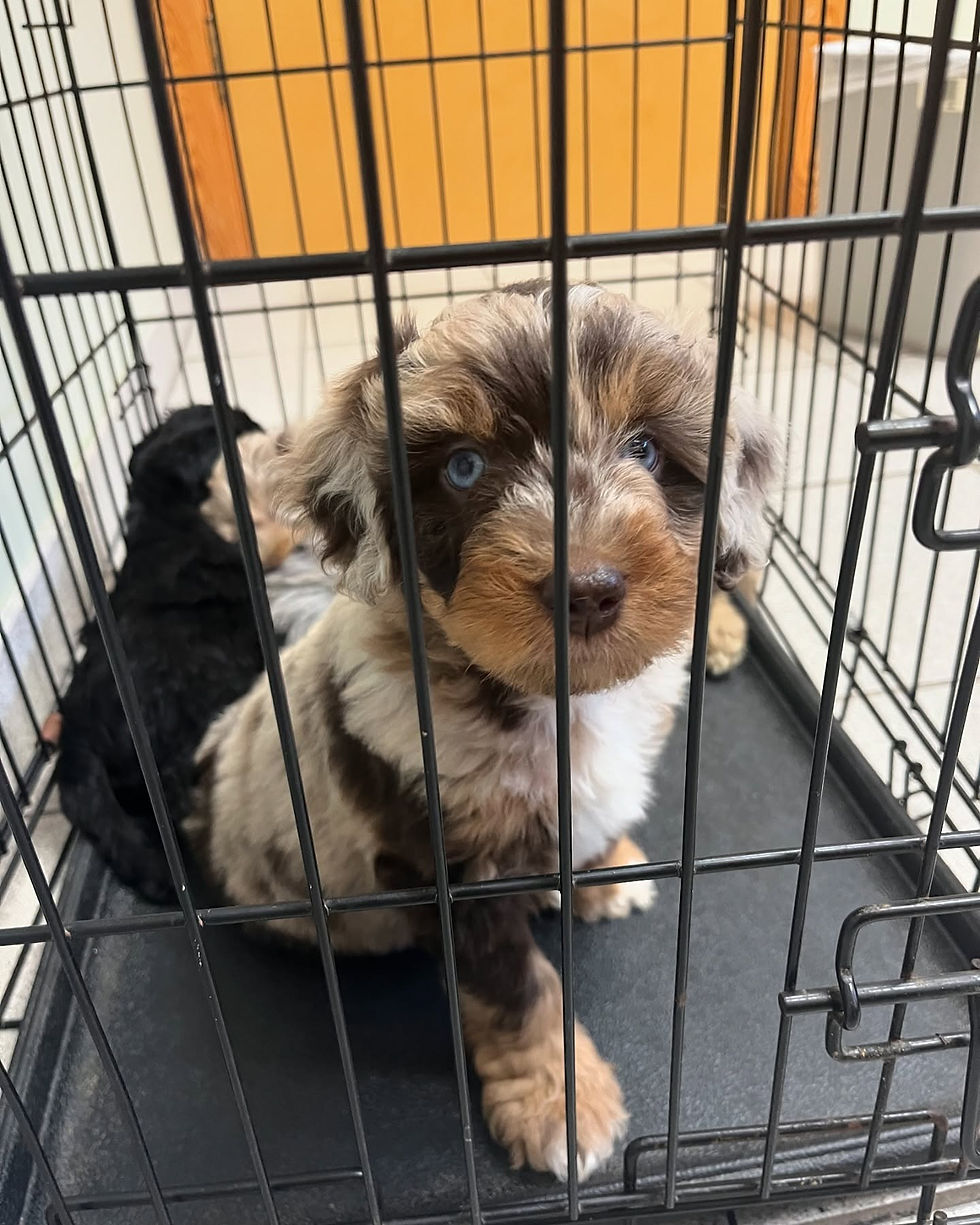
After we get the puppies looked over by our vet and their first round of parvo/distemper vaccine, it is time for puppy reservations!!
By now we know personalities well and can help match up the puppies to their forever families. We start by working with our waitlist. We start at the top of our list (whoever has had the deposit in the longest) and work our way down. We try to give each family up to 24 hours from the time we let them know it is "their turn" to make their pick. We work individually with the families, texting, jumping on Facetime calls and sending plenty of videos to help find the very best fit for their family.
Once a puppy is reserved we mark it as such on our website and if the family has decided on a new name we also start calling the puppy that for them! It is a fun time as we email our families all the information they need to welcome a new pup into their home. We have emails regarding the food with like to feed, our favorite YouTube training videos, information on puppy insurance and the Mills River Doodle Puppy Contract for them to look over. (We also have that posted on our website here..... https://www.millsriverdoodles.com/mills-river-doodle-pet-contract
We get their puppy packs ready, send the measurements for their new collars and harnesses and assist the families in preparing for their new arrival!
8-9 Week Old Puppies
HAPPY GOTCHA DAY!!!
On go home day our pups get one last bath and blow dry, one more dose of dewormer, and head up the the "meet up spot" on our property and wait on their new families.
It is a special moment and we never mind recording childrens reactions, answering questions and watching our families run around our property for a little while getting to know their new best friend.
Our pups leave with 30 days of Trupanion Pet Insurance, Food for a few days, a couple of theri favorite chicken jerky strips, Bil-Jac Treats, a clicker, a blanket and a snuggle puppy!
We are always available for the lifetime of the dog for any questions about raising and loving an Aussiedoodle or Australian Mountain Doodle!!

Contact Us!
We love to answer questions and discuss Doodles!!!
Amanda Banks, Mills River Doodles
828-329-2807 talk or text


Comments